
Instagram Reels used to be the butt of the joke. But roughly five years after its launch, Reels has finally entered the zeitgeist.
Creators and everyday users long considered Reels a place to repost their old TikToks. Over the years, Instagram tried many tactics to make Reels happen, from demoting posts with a TikTok watermark to paying creators thousands of dollars to post original Reels and launching Edits, a competitor to TikTok-owned CapCut.
Instagram has also made significant changes to its algorithm and how it ranks content, making it easier for creators without large followings to grow while also serving the right Reels to the right people. In December, the company launched “Your Algorithm,” giving people more choice over the Reels they see—and Instagram more information on what its users like.
Now, 75% of content recommendations on Instagram in the US are coming from original posts, according to parent company Meta Platforms’ fourth-quarter earnings report on Wednesday. While that’s likely because Instagram’s algorithm is still prioritizing original content, it also suggests that there is now more Instagram-specific content than ever before.
Then there’s the growth of Edits. During the fourth quarter, 10% of the Reels people viewed each day were created with Edits, almost triple from the previous quarter. This shows how creators are finally developing content intended primarily for Reels. While Edits is a separate app, it’s connected to Instagram and allows creators to post to their accounts directly once they’ve finished a Reel.
At the same time, TikTok has gotten more crowded. That’s made it harder than ever for emerging creators to break through, prompting some to focus instead on growing their Instagram accounts by posting a lot of Reels. For many, that strategy has worked. The fact that the new US TikTok has been off to a rocky start—such as technical glitches causing videos to get zero views and hurting earnings—doesn’t help its case with creators.
Walid Mohammed, who told Kaya in 2020 that Instagram needed to fix its algorithm, says it’s “a lot better” now.
“It understands what I like to watch and my interests,” said Mohammed, who is the 26-year-old founder of Breadwinners Club, which helps creators negotiate brand deals and edit videos. But he personally still spends more time on TikTok, which he says still has a superior recommendation algorithm and comment section.
Original content is crucial for social apps because it helps generate more engagement and it’s how they build cultural cachet and conversation. That seems to be what’s now happening with Reels. People are talking about Reels the way they talk about TikTok videos—and they’re spending more time than ever watching them.
On a call with analysts on Wednesday, Meta said time spent on Instagram Reels grew by more than 30% year-over-year globally in the fourth quarter. It’s still likely less than the amount of time people spend on TikTok, but clearly Reels is catching up.
For us, Instagram Reels has now eclipsed our time spent on TikTok. The network effects are also a huge part of this: We send Reels back and forth to friends (and each other!), something we don’t do on TikTok as DMing never took off.
That’s partially by design. TikTok prioritized public interactions and initially encouraged people to send ungated videos on other messaging apps to help it grow. By the time it loosened restrictions for in-app DMs, people hadn’t built that muscle. Plus, most users don’t personally know the people they follow or engage with on TikTok.
On Instagram, users are more likely to know their followers. That’s something Instagram is now leaning into with a test that replaces “followers” with “friends” to show how many mutual connections an account has.
“My whole social graph and most of my friends since I was 12 years old are all on Instagram,” Mohammed said, adding that his friends also send him Reels more often on Instagram than before.
Now, it seems that Instagram is hoping that sharing Reels via DMs will translate to co-viewing on its new app for TVs. As Chad Heaton, Meta’s vice president of finance, put it on the earnings call: “We’ve heard from our community that watching Reels together is just more fun.”
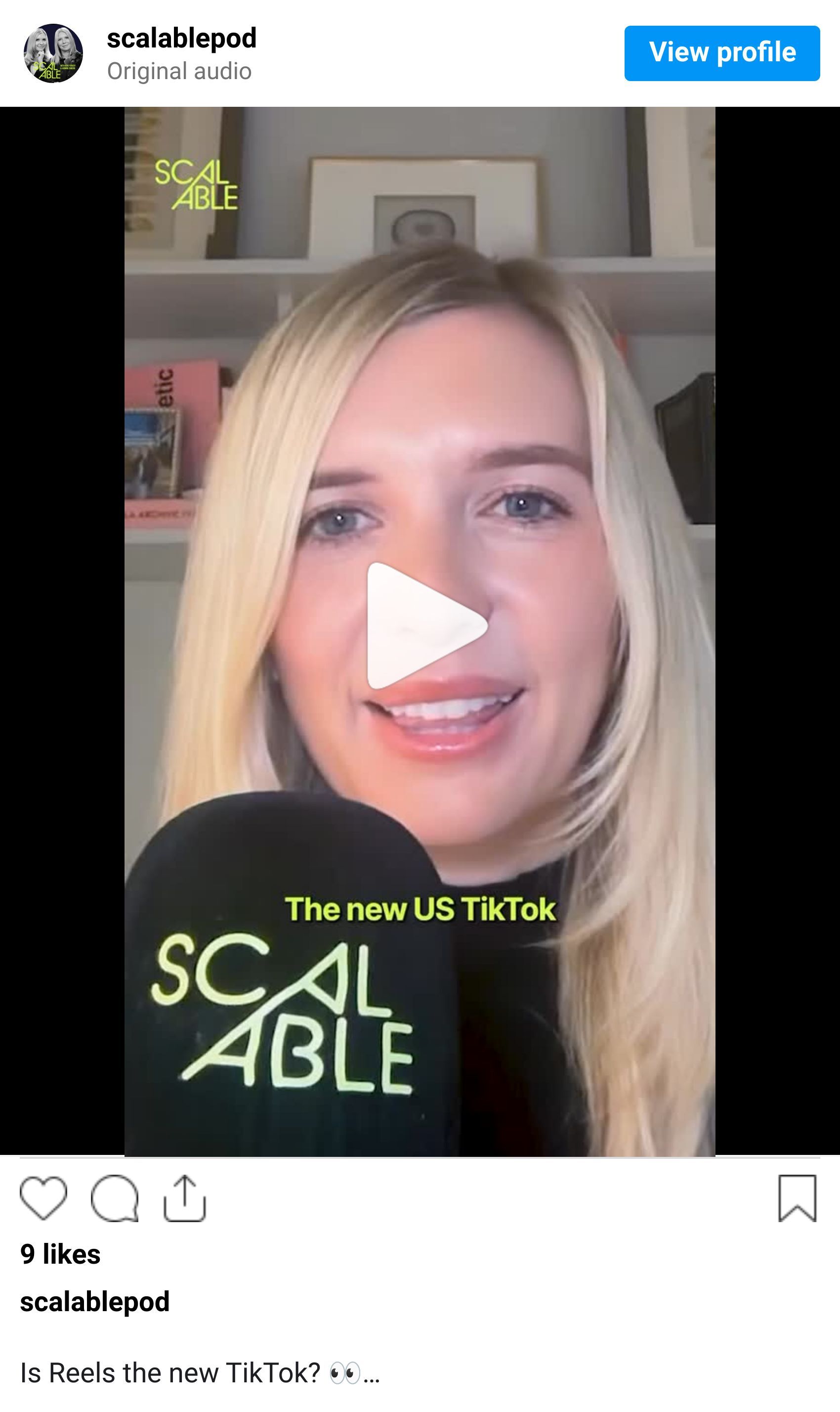
We dove deeper into Reels’ success, as well as the issues plaguing the new US TikTok and much more, in our latest podcast episode. You can watch the full episode on YouTube or Spotify—or listen anywhere else you get your podcasts.
Or check out this Reel for the highlights.
In other news…
The Round Up
Spotify paid out more than $11 billion to the music industry, which it says is the largest-ever annual payment from any retailer, a nod to the days when people bought CDs in stores. The company emphasized in the release that independent artists and independent labels accounted for half of all royalties. Companies like Spotify have received criticism for unfair payouts to creators and artists.
Snap created a separate subsidiary called Specs Inc. for its augmented reality glasses. Snap has been trying to diversify its revenue streams as its ad business has struggled, but it now faces stiff competition from Meta and other tech companies in smart glasses as well.
Amazon is laying off about 16,000 employees to remove “bureaucracy” within the company. The news comes as Amazon is also investing heavily in AI, a reason Pinterest cited for its own layoffs earlier this week.
ICYMI: Meta will test new subscriptions that give users on Instagram, Facebook and WhatsApp access to exclusive features on its apps, though it’s not yet clear what the offering will include.
Deals, Deals, Deals
Goalhanger, the UK company behind “The Rest is History” podcast, announced a minority investment from The Chernin Group. The company will use the new funding to put on live events and expand audio programming to video, Bloomberg reported. It didn’t disclose the terms of the deal.
Public Opinion, the company behind popular music game show Track Star, received a seven-figure investment from Wenner Media Ventures, the VC firm of former Rolling Stone CEO Gus Wenner. The New York Times profiled the social media show in December.
OK Cool, a creator and social-focused marketing agency, was acquired by Residence, which owns a portfolio of creative agencies. Terms of the deal were not disclosed.
Levellr, a data insights platform for brands and game studios focused on Discord, raised $2.5 million in new funding led by Fuel Ventures.
Underscore Talent, a talent management firm representing creators, announced a partnership with Loti AI aimed at protecting the digital likeness, voice and image rights of Underscore’s talent roster. Loti’s technology removes deepfakes with automated takedowns among other features.
Regulatory Woes
TikTok settled a social media addiction lawsuit hours before it was set to go to jury selection. Snap also settled last week. The case, which is now against Meta and YouTube, centers on a young woman from California, who claims her social media addiction led to depression and suicidal thoughts.
It’s a landmark case because it will test for the first time whether social apps can be held liable for harming young people’s mental health via addictive product designs. Other similar cases are also expected to go to trial this year.
France passed a bill that would ban social media apps for teens under 15. The move follows Australia’s teen social media ban, which went into effect in December. As we wrote last year, Australia’s ban was going to be a test case for other countries.
We went deeper on both of these stories on Thursday’s podcast episode.
Creator Moves
The NFL is continuing its efforts to include more creators in the Super Bowl on Feb. 8 and the week leading up to it. This year, the league worked with YouTube and Snapchat to bring more than 160 creators, including Robert Erwin and Max Klymenko, to the San Francisco Bay Area where the big game is being held.
As part of this, the NFL also appointed YouTuber Dhar Mann as its “chief kindness officer.” He will lead a series of digital, social and in-person activations during Super Bowl week, including NFL Honors and the flag football game on YouTube. Mann is a notable choice since he doesn’t focus on sports and it shows how brands are working with creators in other categories. For the NFL, that includes food and fashion creators who are posting tailgating recipes or what they’re wearing to games.
Andrew Huberman, the popular podcaster, is among the new contributors to CBS News under editor-in-chief Bari Weiss. In October, Weiss sold her conservative media outlet “The Free Press,” which she published via Substack, to CBS parent company Paramount.
The move is part of her crusade to modernize the outlet, but her tenure has been controversial, including her decision to postpone a “60 Minutes” segment critical of the Trump administration. Earlier this week, she told CBS staff that the outlet isn’t “producing a product enough people want.”
🎤Podcast Movement, a podcasting events company, and Sounds Profitable, a trade organization for the podcasting industry, announced the first wave of talent who will appear at its Podcast Movement Evolutions event.
The lineup includes John Allen, the podcaster better known as MrBallen—and us! We will be on stage for a special live version of our Scalable podcast. The event is happening March 13–15 during South by Southwest, the annual tech and arts festival in Austin. Let us know if you’ll be in town!
Talent Tracker
Nicole Bell was promoted to YouTube’s new head of Canada overseeing the company’s content and creator operations in the country. She replaces Andrew Peterson who is now YouTube’s global head of creator economy ecosystem.
Piet Southey is the first US managing director at influencer marketing firm Billion Dollar Boy. Southey, who was previously the company’s head of clients in Europe, will relocate from London to New York for the role next month.
Dakota Rae Lowe, vice president of social strategy at Edelman, announced she’s leaving the company. She hasn’t yet announced what’s next.
